
If your child has an inguinal hernia, being young alone is not a reason to delay treatment. Pediatric inguinal hernias do not resolve on their own, and tissue protruding through the opening can become trapped. This is called incarceration.
For newborns, children and adolescents, age is only one part of deciding when to operate. At Damsoyu Hospital, we examine the hernia and your child's condition before recommending the timing of treatment. Our guidance on treatment timing (Korean)
Does a child with an inguinal hernia need surgery?
An inguinal hernia in a child requires surgical treatment. It can occur when a passage between the abdomen and groin that was present before birth remains open, allowing tissue or part of an organ to protrude through it.
A child may have a hernia even if they are playing normally and seem comfortable. A groin bulge may appear when they cry or strain, then disappear when they relax. The bulge going away does not mean the hernia has healed. If this keeps happening, please arrange an examination. Pediatric hernia symptoms and treatment (Korean)
Can a newborn have inguinal hernia surgery?
Yes. A newborn can have surgery following a medical assessment. We also perform pediatric hernia surgery on babies who were born recently.
We consider both the hernia and your baby's condition when deciding on a surgery date. If your baby has a fever, a severe cough or bronchitis, the medical team will assess whether the illness should be treated before surgery. Please let us know if your baby's health changes after booking. Newborn surgery and health before surgery: FAQ (Korean)
What if the bulge is not visible at the appointment?
A photo or video taken when the bulge appears can help. Please tell us which side of the groin was affected and whether the bulge appeared during crying or straining.
We use an examination and ultrasound to check for a hernia. In boys, we also check the position of the testes. The bulge may not be visible in the examination room, so what you have observed at home is useful information for the consultation. Examination and ultrasound at Damsoyu Hospital (Korean)
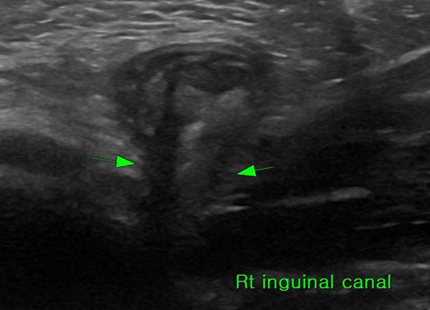
How is surgery performed at Damsoyu Hospital?
We treat pediatric inguinal hernias laparoscopically. The surgeon looks inside the abdomen and closes the open hernia passage with sutures. Our laparoscopic approach (Korean)
Pediatric laparoscopic instruments are inserted through small incisions. The surgeon operates while viewing a magnified camera image. Both sides can be inspected, so a hernia on the opposite side can also be treated during the same operation if treatment is needed. After surgery, you can receive an explanation while viewing the actual operation video. Pediatric laparoscopic hernia surgery (Korean)
Who looks after my child during general anesthesia?
Pediatric hernia surgery is performed under general anesthesia. At Damsoyu Hospital, anesthesiology specialists administer anesthesia and monitor your child's condition during surgery and recovery. You can find our surgical and anesthesia specialists on our medical team page. Anesthesia FAQ (Korean)
Please tell us about previous operations, hospital admissions and any medicines your child takes. Fasting instructions can differ for breast milk, formula and solid food. Follow the individual fasting instructions provided when you book. Preparing for surgery (Korean)
Which symptoms should not wait until the surgery date?
If a bulge that normally goes back in stays out and becomes firm, with marked distress or vomiting, seek medical attention immediately rather than waiting for the booked surgery date.
These changes may mean that tissue is trapped and cannot return to the abdomen. Incarceration can lead to an emergency if the blood supply is affected. Please seek care promptly if these symptoms occur. Incarcerated hernia symptoms: FAQ (Korean)
Watch 이성렬 explain incarceration in pediatric hernia (Korean) · 01:45–02:25 ↗
When can my child go home and return to nursery or school?
Our one-day system allows consultation, tests, surgery and discharge on the same day. Discharge may be possible around six hours after surgery, but we decide when a child can go home after assessing their condition as they recover from anesthesia. We also have a children's ward and a dedicated nursing team. One-day surgery and pediatric care (Korean)
Our FAQ states that children may return to kindergarten the day after surgery. The return date should still take your child's recovery into account. Returning to kindergarten: FAQ (Korean)
The advice about returning to kindergarten the next day should not automatically be applied to school attendance or exercise for older children and adolescents. As with discharge, please ask for guidance based on your child's condition.
How can I check surgery costs and insurance?
Our published list of non-covered medical charges (Korean) shows individual items and their prices. It does not give a personal total for pediatric inguinal hernia surgery. Please do not add all the listed items together to calculate a surgery price. Contact the hospital to confirm the costs that apply to your child's surgery.
Payment under a private indemnity health insurance policy depends on the terms of that policy. Check coverage and required documents with your insurer. Tell us which documents you need, and we can guide you on preparing them. Insurance and documents: FAQ (Korean)
If a groin bulge keeps appearing, please arrange an examination and bring photos or video, along with information about when you first noticed it. You can also read our pediatric hernia surgery guide for more about preparing for the visit and surgery.
Diagnosis, the surgical approach and discharge timing depend on your child’s condition and the medical team’s assessment.
The booking page is in Korean. Please confirm your preferred consultation language with the hospital.