
Returning to work, driving and exercise after hernia surgery involves separate assessments of pain, movement, the medicines you take, and the demands of your work and exercise. You may be ready to restart these activities at different times. Being able to walk does not automatically mean you are ready to lift heavy objects or drive a car that you may need to stop suddenly. This article covers everyday activities after adult inguinal hernia surgery. Follow your own discharge instructions and care team’s advice first.
Consider your tasks and commute before returning to work
Returning to a desk job is different from returning to work that involves repeated lifting or physical effort. The demands of your job and your current recovery both matter, so discuss how much time off you need with your care team. NHS: recovery after inguinal hernia repair
During your consultation, describe what you actually do throughout the day as well as your job title. Standing for long periods, repeated lifting, twisting and frequent stair climbing all help make the return-to-work discussion more specific. Mention a long commute or any driving you do for work, too.
If possible, speak to your employer in advance about adjusting your hours or duties when you first return. Before discharge, it is also useful to arrange any medical documents needed for work and find out when to discuss your progress again.
Driving involves turning and using the pedals, too
You need to be able to wear a seatbelt, turn your body and use the pedals without discomfort. Beyond being able to sit in the car, you must be able to react safely if you need to stop suddenly. If pain makes it hard to concentrate on driving, postpone your return. Guy’s and St Thomas’ NHS: recovery and driving after hernia repair
Ask your care team when you can first drive after surgery and whether your medicines affect driving. Do not test an emergency stop on the road to find out whether you are ready. Before surgery, arrange for someone to take you home or prepare another way to travel after discharge.
Increase walking and strength training at different paces
During recovery, start with permitted light activity, such as walking, and build up gradually. Ask separately when you can lift heavy objects or resume strenuous exercise. Consider how your body responds rather than increasing exercise intensity all at once simply because a set number of days has passed. Stop movements that cause pain or discomfort and contact your care team. NHS: activity during recovery
Describe your usual exercise specifically. Walking, running, hiking and strength training that strains the abdomen involve different movements and demands. Instead of asking only “Can I exercise?”, ask “Can I do this movement at this intensity?” This helps you get advice about the activity you intend to do.
These symptoms need attention before plans to return to activity
Contact the hospital that performed your surgery promptly if pus is coming from the wound, redness or swelling is worsening, you develop a fever, or abdominal pain or bloating is getting worse. If you have severe difficulty breathing or chest pain, seek emergency care without waiting for a consultation reply. NHS: warning symptoms after hernia repair
Discuss your own recovery plan at Damsoyu Hospital
Rest according to how you feel and any discomfort after surgery. Alongside the general information on our website, discuss your plans for work, driving and exercise separately, taking account of your actual procedure and recovery. Damsoyu Hospital’s adult hernia FAQ (in Korean)
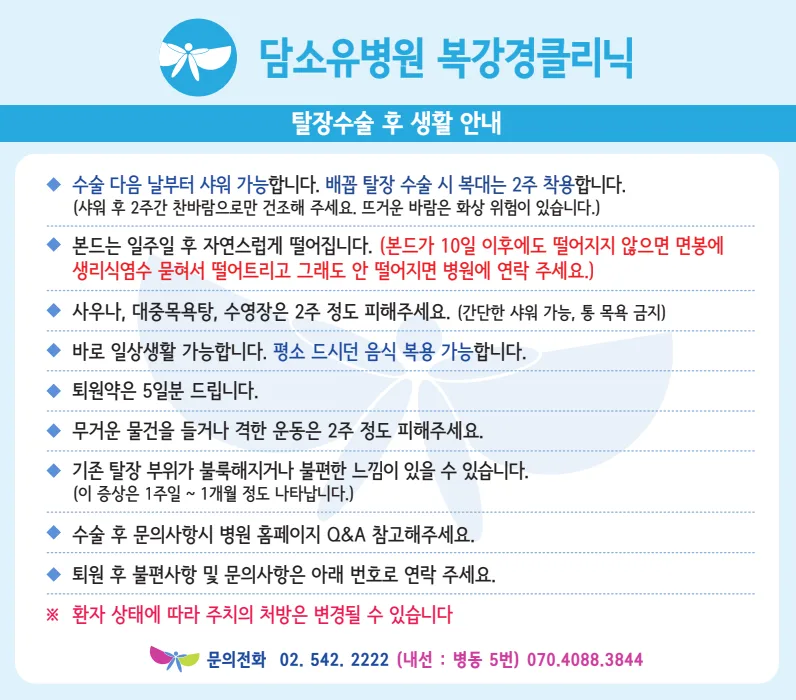
Before surgery, tell us how physically demanding your work is and which activities you have planned. At discharge, ask which activities you can resume, which need to wait and how to contact us if a problem develops. For a surgical consultation, use Damsoyu Hospital’s telephone consultation request form (in Korean).
DAMSOYU / Adult hernia
Explore the care behind this guide
Understand assessment, repair options and the questions that shape your care plan.
Explore treatment →Information to help you prepare for a consultation. Your care plan is determined after a medical assessment.
The booking page is in Korean. Please confirm your preferred consultation language with the hospital.
Confirm your consultation language and appointment arrangements before travelling.